A commercial electrical build in Fairhope starts with a trench in the parking lot and ends with the last dining-room pendant. Everything between those two moments is coordinated with framing, mechanical, refrigeration and the utility. Wave Electric has run that sequence on Baldwin County commercial work since 2015, including a ground-up Chick-fil-A in Fairhope and a Chase Bank branch in Daphne.
The growth that pulled the commercial work here
You do not need a chart to feel Baldwin County growing. The chart draws the shape.
US Census Bureau, Building Permits Survey, county file
See the numbers
| Date | Single-family permit value (USD) | Note |
|---|---|---|
| 2015 | 302,600,000 | $302.6M |
| 2016 | 399,000,000 | $399.0M |
| 2017 | 449,800,000 | $449.8M |
| 2018 | 502,100,000 | $502.1M |
| 2019 | 571,400,000 | $571.4M |
| 2020 | 817,300,000 | $817.3M |
| 2021 | 817,700,000 | $817.7M |
| 2022 | 915,200,000 | $915.2M |
| 2023 | 1,025,100,000 | $1.03B |
| 2024 | 1,101,017,641 | $1.10B |
Rooftops pull retail, restaurants and clinics behind them. Every one needs wire. That is why a small electrical shop in Baldwin County ends up on commercial timelines it would never have seen a decade ago.
What the electrical sub actually owns on a commercial build
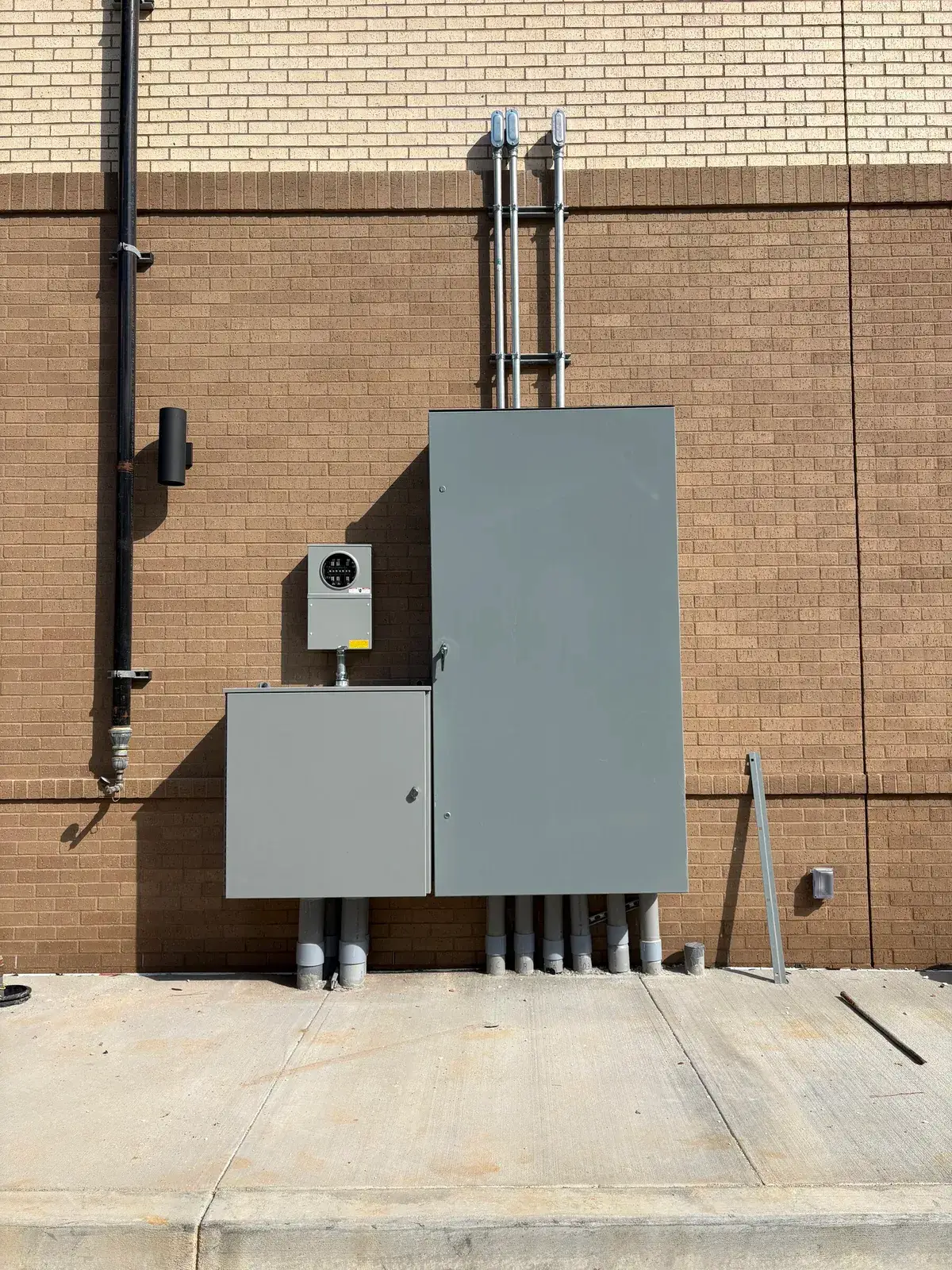
Everything from the utility’s transformer to the last fixture. On the Chick-fil-A in Fairhope, that meant underground service to the pad, rough-in through the walls and ceilings before drywall, panel and service gear, and finish work covering dining and exterior lighting. On the Chase Bank branch in Daphne, it meant site work, underground conduit, the meter and CT cabinet, and the service disconnect.
The electrical scope brackets the whole job. First sub on site after the pad is poured. One of the last, after paint.
Phase one: the underground service
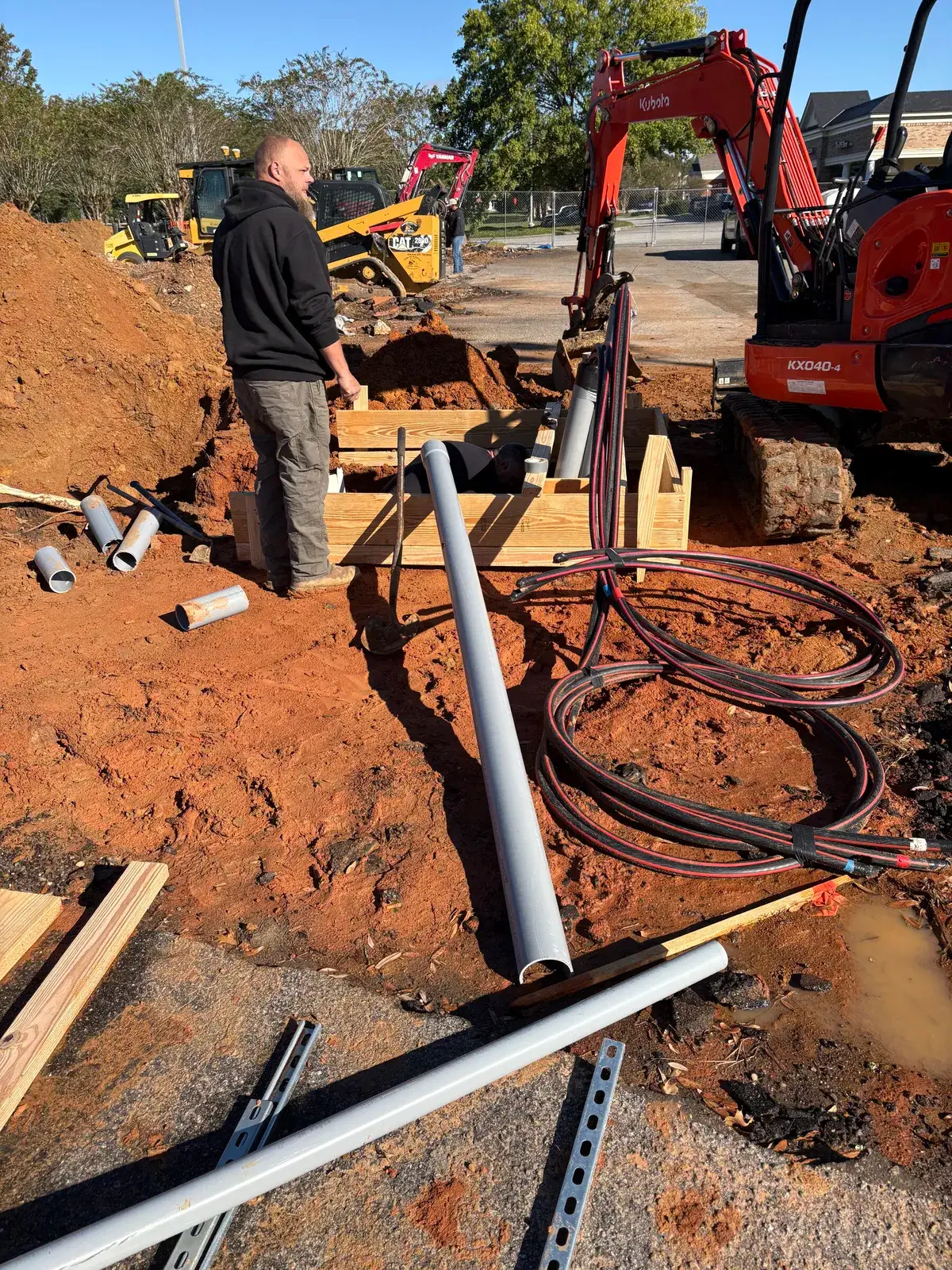
Underground service is the run from the utility’s transformer or pedestal to the meter and main disconnect on the building. Trench depth is code-mandated. Conduit sizing follows the load calculation. In Fairhope the connection lands with Fairhope Public Utilities, the city’s own electric department, and it is coordinated by the electrical contractor, not the GC.
On the Chase Bank job, the same phase covered a CT cabinet. That is the enclosure the utility uses to meter services large enough that a standard socket cannot read them directly, and anything above roughly 400 amps at 120/240 volts typically needs one.
The trench does more than carry power. Telecom, fire alarm feeds, and separate runs to a sign, gate or pole often share the route. Getting the layout right the first time is what keeps a parking lot from being cut open a month later for something that could have gone in with everything else.
Phase two: rough-in
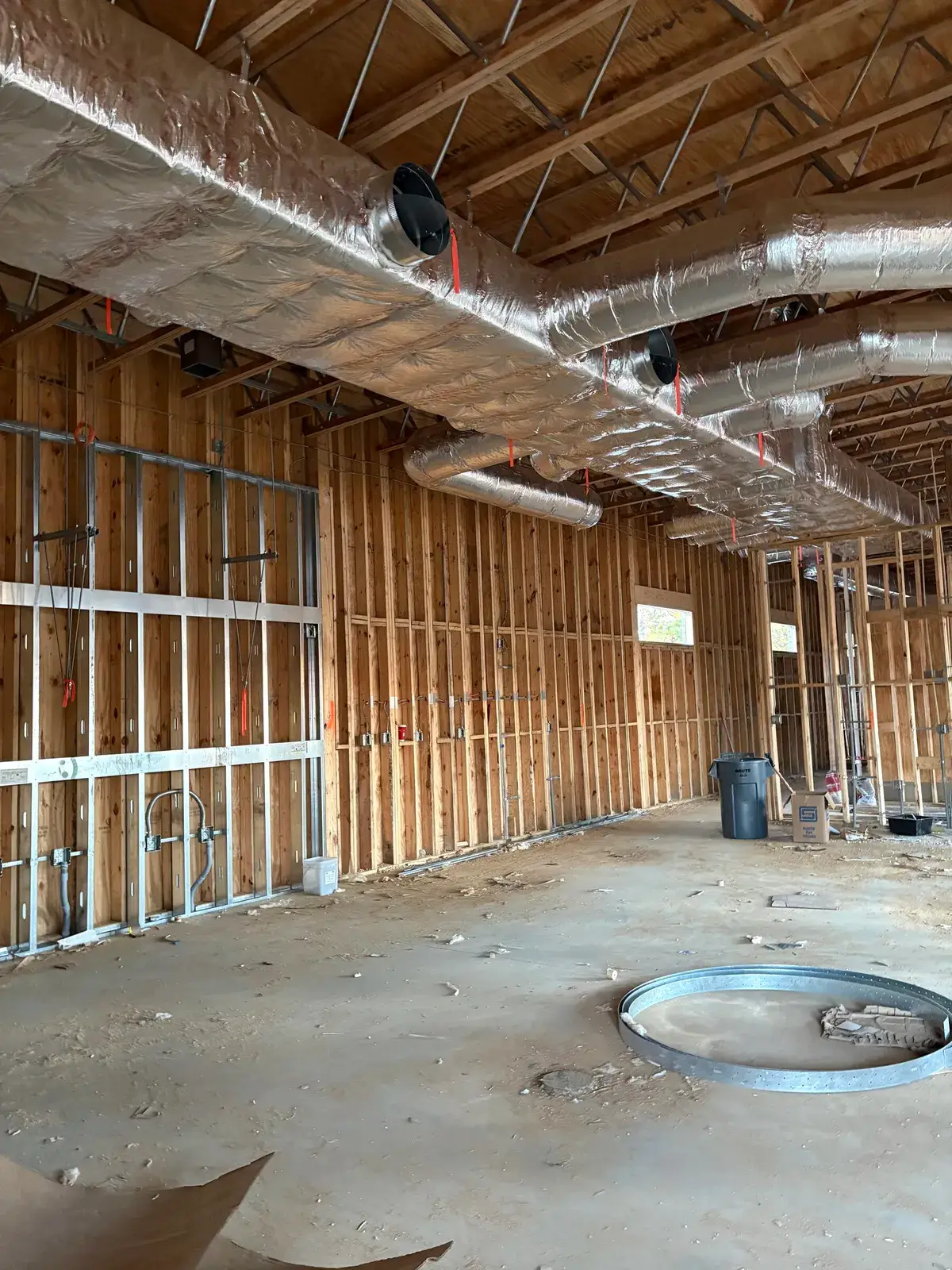
Rough-in is every circuit, every box and every conduit run put in place after framing and before insulation. Then the walls close. Anything that was not roughed in is a wall someone has to open back up, and that is why rough-in is where a commercial electrician earns the schedule.
Commercial rough-in runs different materials than a house. EMT and rigid conduit take the place of the romex a home uses. Every box gets located off the reflected ceiling plan, and every home run is sized to the load it will feed. On a restaurant, rough-in includes equipment feeds for the hood, the walk-in, rooftop units and the fryer bank, plus data and communication conduit. That means real coordination. All of it lands with the mechanical and refrigeration subs so the right circuit reaches the right spot with the right amperage.
Miss a home run at this stage and you are cutting drywall next month.
Phase three: panel and service gear
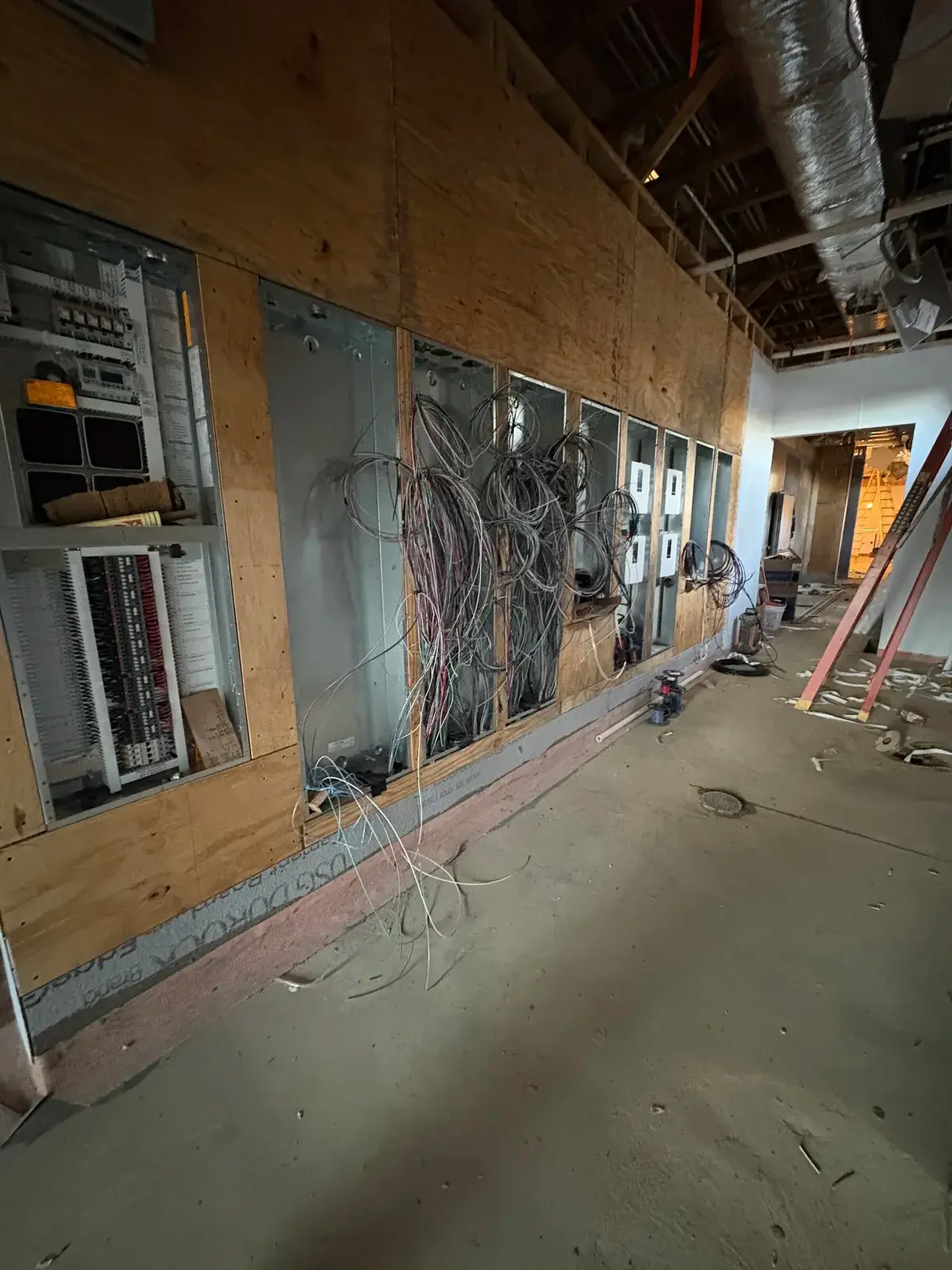
Panel and service gear is the heart of the whole system: the main breaker or disconnect, the panelboards, and the branch breakers that feed every circuit in the building. On a restaurant or a bank branch, that usually means multiple panels sized to the load, often with a step-down transformer for lighting and receptacles.
Load calcs go first. The reason is money. Undersizing the service costs a lot more to correct after the fact than it does to size right on paper. Restaurants pull hard on the cooking equipment side, hoods, fryers, ovens, refrigeration, and a service sized for a general retail tenant will not carry a kitchen. If the service ever needs to grow later, this is the gear that either handles it or gets replaced first. The same conversation drives residential panel upgrades on smaller jobs.
Phase four: finish and lighting
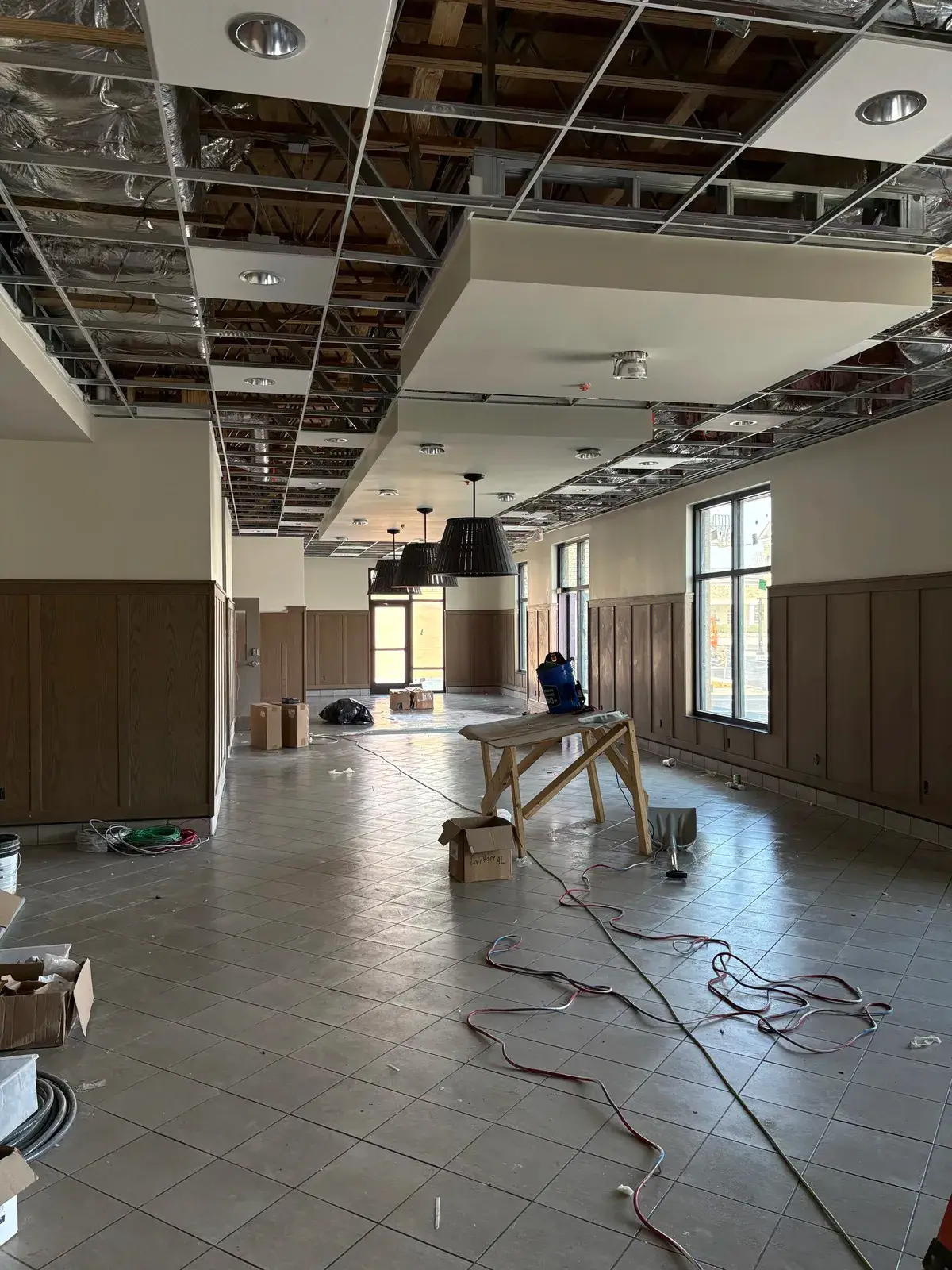
Finish is where the electrical becomes visible. Devices go into the boxes that were roughed in months earlier. Cover plates go on. Dining and exterior fixtures get hung and aimed.
The outdoor and security lighting that the parking lot and the building perimeter depend on gets wired and tested in this phase too. On a QSR site, exterior lighting has to be up and working before the health inspector and the fire marshal walk the site for their sign-offs. Miss that window and the certificate of occupancy waits.
Phase five: the final inspection
Final inspection is the city inspector confirming the electrical was installed to code and to the approved plans. In Fairhope that is scheduled with the City of Fairhope Building Department at 555 South Section Street.
Fairhope also requires a City of Fairhope business license on top of the state contractor’s license, and the permit application has to name a state-licensed electrical contractor by name. Nothing energizes long-term until the inspection passes and the utility flips the service. That is the moment the building becomes real.
The permit and the utility are the electrical sub’s problem
The electrical contractor pulls the permit and coordinates the utility. Not the GC. Not the owner. Wave Electric holds Alabama electrical contractor license #02617 and pulls permits in every one of the nine Baldwin County cities.
Daphne runs a different sequence than Fairhope. The structure itself has to be permitted before the electrical permit can be issued, and Riviera Utilities will not connect service without that electrical permit in hand. Which town issues what across Baldwin County is covered in more detail here, and it is the kind of thing you want a contractor who works the county every week to already know.
Change orders and coordination with the other trades
Commercial jobs generate change orders along the way. A tenant build adds a walk-in cooler mid-rough-in. A bank branch decides it needs an extra data drop once the layout is finalized. How the electrical sub handles that shifts the schedule less than owners expect when the contractor is used to working under a GC and can price the change without stalling the crew.
Coordination with the other trades follows the same discipline. Rough-in has to land before drywall closes the walls, and any conflict with plumbing, mechanical or refrigeration gets resolved before that happens, not after. Jimmy walks the site with the other trade foremen at rough-in and again before finish, so conduit, boxes and fixture locations match what the reflected ceiling plan and the equipment schedule actually call for.
What makes a smaller shop workable at QSR scale
The owner staying on the job.
Jimmy is on site, answering the phone, meeting the inspector and making the calls when something changes on the electrical side. That is what nearly 2,500 jobs since 2015 has shaken out to, from a residential outlet swap to a national-brand ground-up build. For a general contractor or an owner who wants one electrical sub who can carry a QSR or a branch build in Fairhope or Daphne, from your home to your business, that is what Wave Electric does.
More commercial work sits on the projects page. The Fairhope commercial calls run alongside the residential work Jimmy handles on the Eastern Shore and in Daphne every week.
Call Jimmy at 251-656-4601 for a free estimate on your commercial build in Baldwin County. Wave Electric is licensed and insured, and the electrical gets done right the first time.